
Working as a Dancer in a Vienna Strip Club
Working as a dancer in a Vienna strip club is a public-facing job with a strong performance element, but it is also practical, organised work. The women manage shifts, appearances, conversations, stage time and private bookings while keeping clear boundaries in a busy social setting.
The details vary by house, yet the basic rhythm is familiar. A dancer usually combines scheduled work with self-presentation, careful money handling and constant attention to safety. Knowing how the club operates before accepting a shift makes the job more manageable and professional.

The shape of a shift
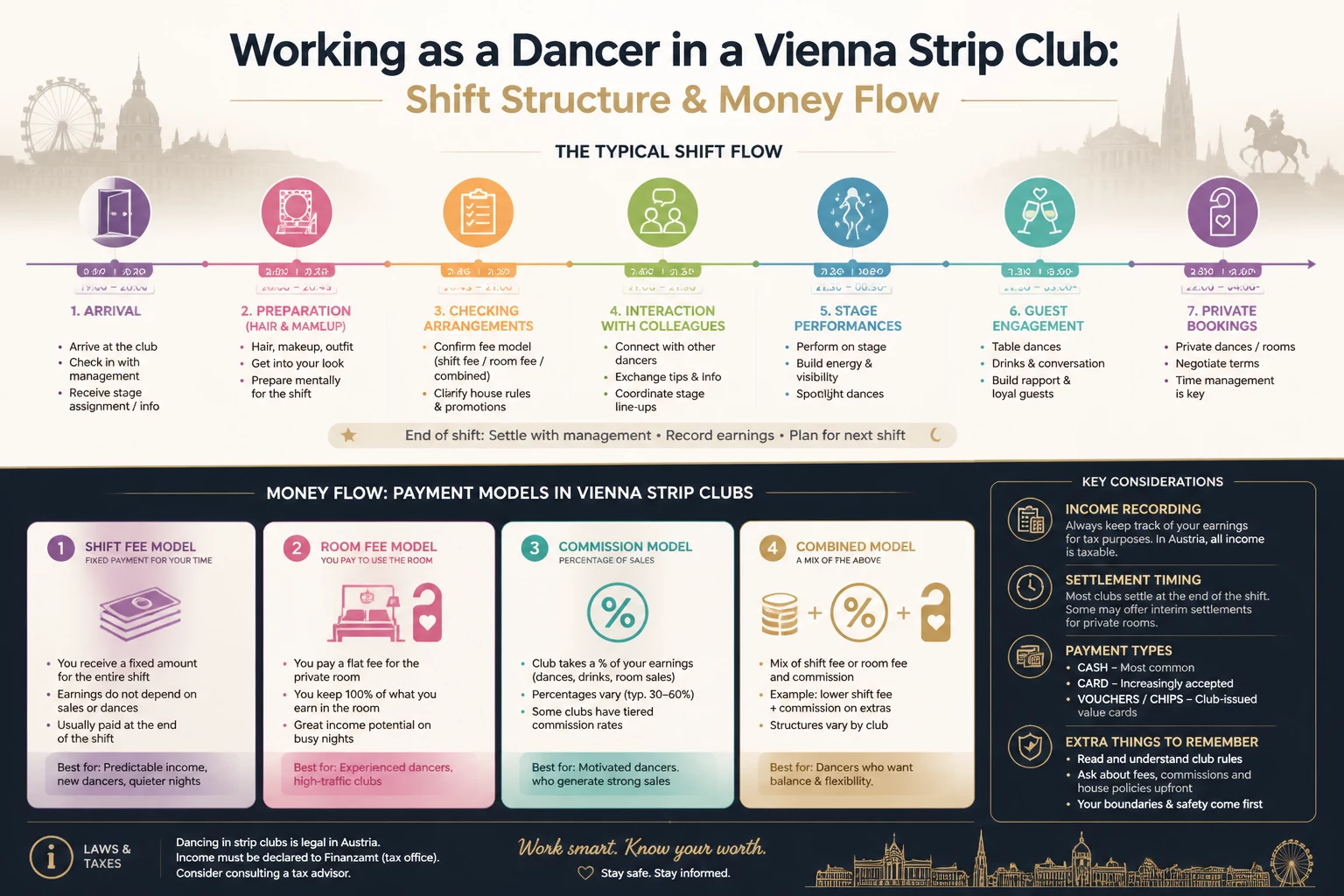
A shift normally begins before the first performance. The dancer arrives with enough time to change, prepare hair and make-up, check the evening’s arrangements and speak with colleagues or management. Some clubs have a more formal rota, while others allow dancers to agree individual working days. Busy nights may bring a steady flow of guests, whereas quieter shifts can involve more conversation and waiting between opportunities.
The work is not limited to being on stage. Dancers introduce themselves, move around the venue, talk with guests and decide which interactions feel comfortable. There can be long periods on one’s feet, loud music and the need to remain attentive even when the room feels relaxed. A professional attitude matters because the club experience depends on consistency, courtesy and clear communication throughout the shift.
How the money works
Payment structures differ between clubs. A house may charge a shift fee, room fee or other agreed contribution, then leave the dancer to keep income from dances and tips. Another venue may use a commission model, sharing revenue from private dances or drinks-related activity between the dancer and the house. Some arrangements combine a fee with commission, so the full agreement should be understood before working.
It is useful to ask how each type of income is recorded, when settlement takes place and which services are included in the house’s share. A dancer should also understand whether card payments, vouchers or house tokens are handled differently from cash. The practical background is explained in this guide to how money flows in a Vienna strip club. A licensed, established venue such as Maxim Wien illustrates the kind of professional setting many visitors associate with the city’s higher-end clubs, although every workplace has its own agreement.
Stage sets and presentation
Stage work is a short live performance rather than a simple walk-on appearance. The dancer chooses music, builds a mood and uses movement, timing and eye contact to hold attention. Sets may be energetic, elegant, playful or deliberately restrained. Good preparation helps, particularly when the venue runs several performances during one evening and the dancer needs to maintain a polished appearance each time.
Music selection affects the room more than guests often realise. A strong track has a clear opening, a useful pace and a finish that allows the dancer to leave the stage cleanly. The order of songs can also shape the atmosphere, as shown in this explanation of how a strip club music set is built. Costumes, shoes and personal stage names are part of the presentation too, with many dancers choosing a name that feels memorable while keeping private and working identities separate.
Private dances and boundaries
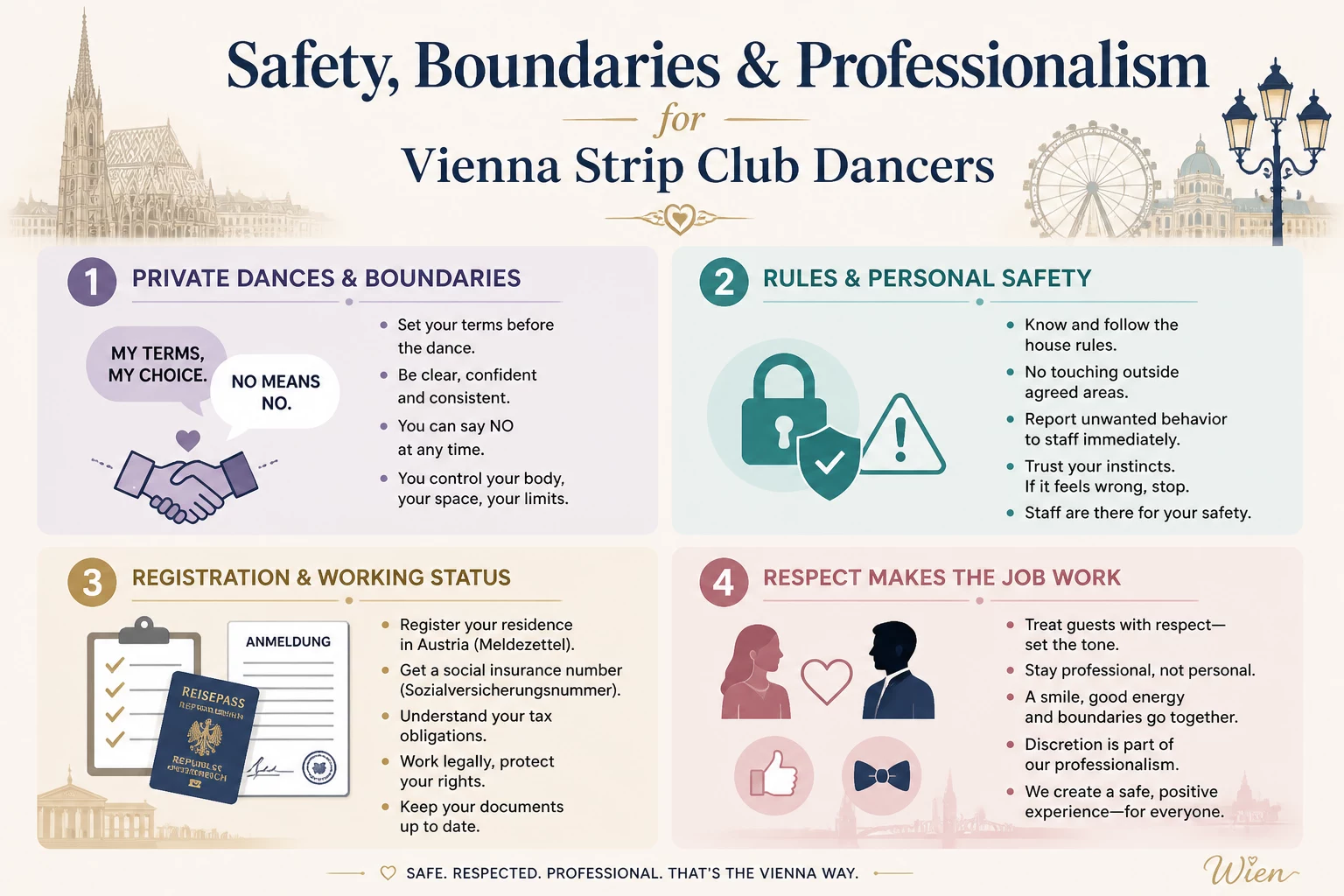
Private dances are usually more personal than a stage set, but they still take place within the club’s rules. Before accepting one, the dancer can establish the duration, price and permitted level of contact. Clear words at the beginning prevent confusion later. A guest who asks for something outside the agreement can be refused, and the dancer can end the interaction if the boundary is ignored.
Professional dancers do not need to apologise for having limits. A calm explanation is often enough, but management or security should be involved when a guest becomes aggressive, intoxicated or persistent. The same principle applies to photographs, touching and attempts to follow a dancer into restricted areas. The club’s backstage routines, colleagues and staff support are part of the safety structure, not an afterthought, as described in what happens backstage in a Vienna strip club.
Rules and personal safety
House rules protect the dancers, guests and business. They may cover phones and photography, touching, private areas, intoxication, payment, arguments and the use of changing rooms. A dancer should know who is responsible for resolving a dispute, where to go when a guest crosses a line and how to record money or incidents. The rules should apply to everyone, including regular customers and groups celebrating a special occasion.
Personal safety also comes from small habits. Keep valuables secure, avoid leaving drinks unattended, stay aware of exits and tell a colleague when a private interaction feels uncomfortable. Do not allow pressure about alcohol, personal contact details or meeting outside the club to become part of the job. Visitors can learn more about appropriate conduct in this guide to behaving around dancers in Vienna. Respectful guests make it easier for staff to maintain a relaxed room without compromising anyone’s boundaries.
Registration and working status
Legal registration depends on the dancer’s nationality, residence, employment arrangement and the exact nature of the work. A person working independently may have different tax, social insurance and business obligations from someone engaged by a company. Immigration permission can also matter for people who are not Austrian or EU nationals. These are administrative questions, not matters to leave until the first night.
Before starting, obtain clear written information about the proposed working arrangement and seek current advice from an official source or an organisation that supports sex workers. The City of Vienna’s prostitution information is a useful starting point for local legal and administrative guidance, while SOPHIE offers confidential counselling and practical support. Keep records of agreements, income and expenses, and take independent advice when a contract or fee structure is unclear.
Respect makes the job work
Guests generally get the best evening by treating the women as professionals rather than as public property. Speak normally, listen when a boundary is stated and pay for agreed services without bargaining in the middle of a private dance. Tips are welcome when offered discreetly and without creating an expectation of extra access. This guide explains how to tip without making it awkward.
For dancers, the same professionalism applies in the other direction. Be warm without promising more than you intend, keep agreements clear and let staff handle difficult guests. A stage name can provide useful privacy, and a firm routine around money, boundaries and breaks helps protect energy over a long evening. The job is social, physical and performative, but it should still be approached as work with rights, rules and personal choice.