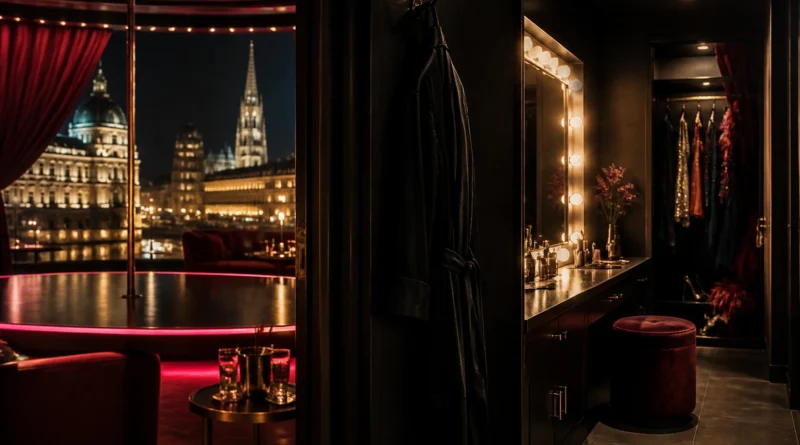
What Happens Backstage in a Vienna Strip Club
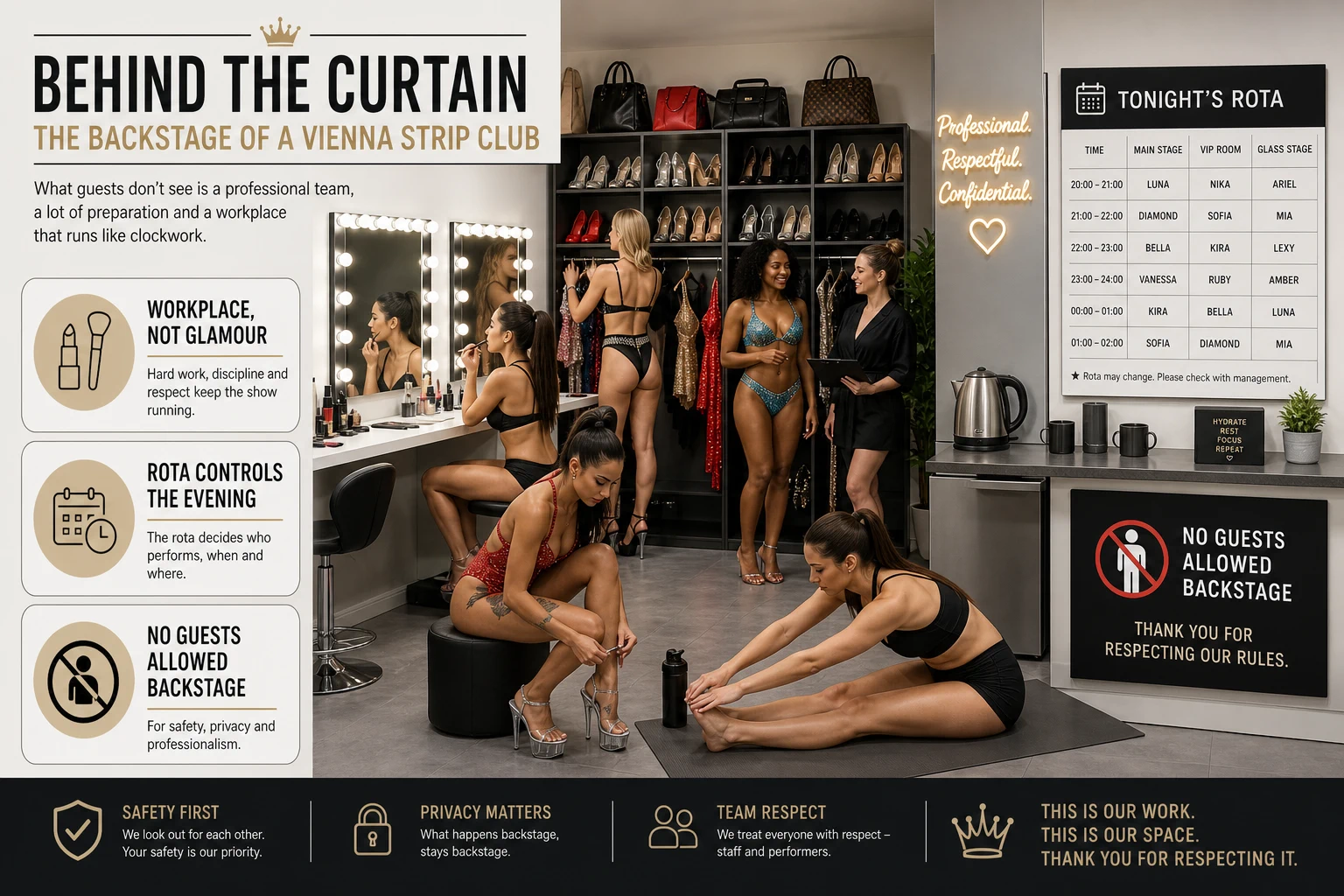
Guests imagine backstage in a strip club as a glamorous private world, and the reality is closer to a busy changing room at a theatre. Mirrors, bags, shoes in rows, a kettle, a rota on the wall, and several people working through a shift with the practical efficiency of professionals who have done this many times. It is the least mysterious part of the building, and understanding it explains a great deal about what happens out front.
It is a workplace, and it looks like one
The dressing area is where shifts begin and end, where costumes and shoes live, and where preparation happens. It is functional rather than decorative, because it is used by several people at once under time pressure. The tone is that of any backstage anywhere: focused before a set, relaxed and talkative after one.
What fills the time is the unglamorous side of the profession, which is mostly maintenance: makeup, hair, costume repairs, stretching and rest. Those requirements are more demanding than an audience assumes, and they are laid out in the skills a dancer needs to succeed in Vienna’s clubs.
The rota rules the evening
Stage sets are scheduled, not spontaneous. A rota on the wall determines who performs when, and it is built around the room’s curve: quieter slots early, the strongest performers around the peak, a wind-down towards closing. Dancers plan their conversations on the floor around their own stage times, which is why someone may excuse herself mid-conversation without explanation.
That scheduling interlocks with the music, and the two together are what makes an evening feel coherent rather than random. The mechanics of it are set out in how a strip club music set is built.
Who is allowed back there
Staff and performers. Not guests, not ever, in any properly run house. This is not coyness; it is the one physical boundary that makes the job workable, because it guarantees a space where nobody is performing and nobody is being watched. A club that lets a guest behind that line has abandoned the distinction its whole business depends on.
Asking to see backstage is therefore a request that cannot be granted, and asking twice reads as a problem rather than as curiosity. It belongs in the same category as the other boundary questions covered in how to behave around dancers in a Vienna strip club.
The separation of two lives
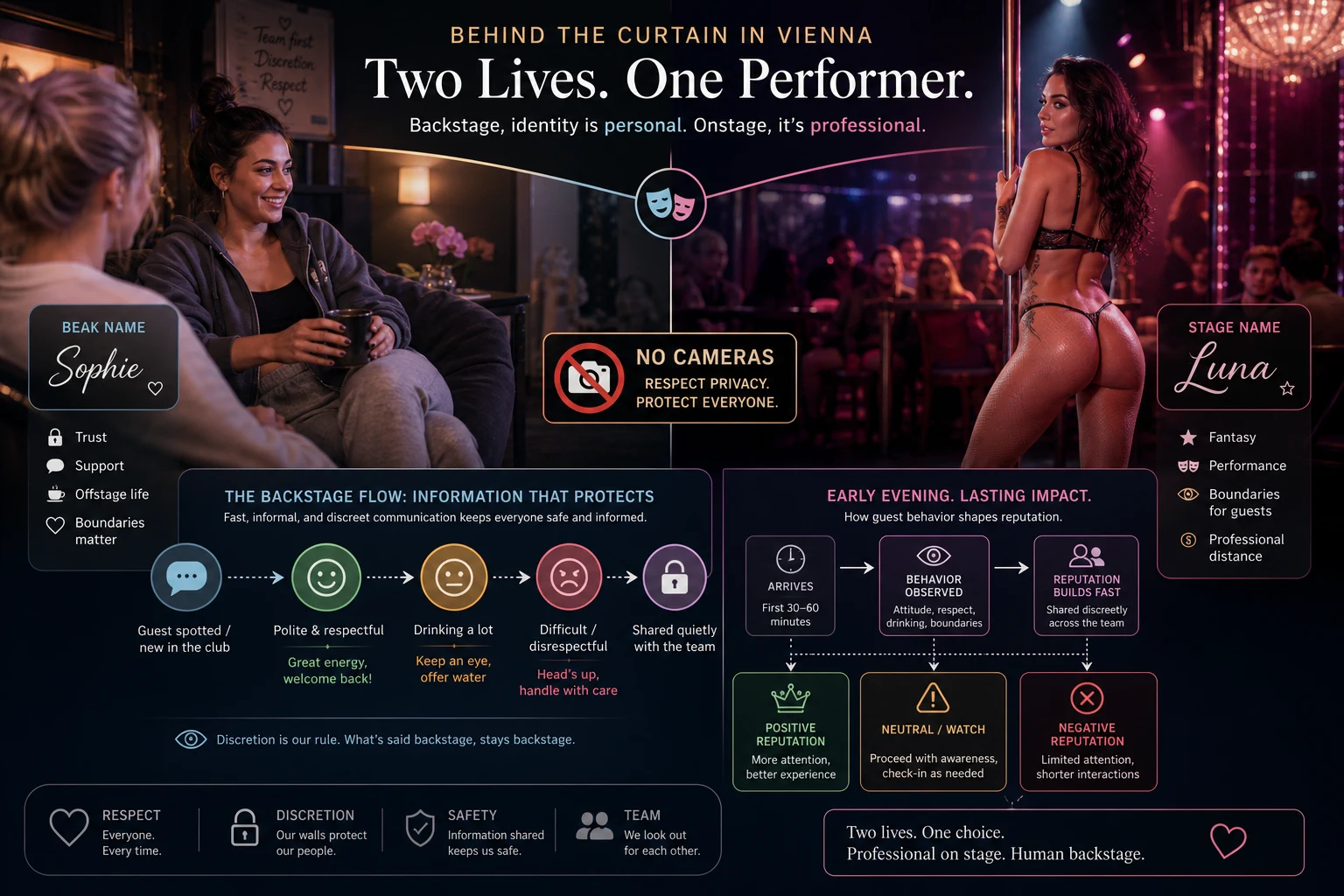
Backstage is where the working persona is put on and taken off, literally and otherwise. Most performers keep their professional identity and their private life carefully apart, and the dressing room is the airlock between them. Conversations back there use real names; conversations on the floor do not.
That separation is the reason stage names exist and the reason cameras are treated as a serious threat rather than a nuisance. The naming side of it is discussed in how dancers choose their stage names, and the camera side in why some Vienna strip clubs ban phones completely.
What gets discussed back there
Practical information, mostly, and it travels fast. Which tables are drinking and which are only watching, who is polite, who is difficult, whether a particular group needs to be handled carefully. This is informal, unrecorded and highly effective, and it is one of the main reasons a guest’s reputation inside a club is established within the first half hour.
The consequence for a visitor is worth stating plainly: how you treat the bar staff and the first person you speak to determines how the rest of the evening goes. That informal filtering happens in every venue in this scene, as the sex bars describe in what a bartender notices in the first ten minutes.
Why any of this matters to a guest
Because it reframes the evening accurately. The person you are talking to is at work, on a schedule, with colleagues and a rota and a shift that ends. Treating the conversation as work rather than as a private romance costs a guest nothing and improves everything: it makes his questions more sensible and his behaviour easier to be around.
It also explains the money structure, since stage sets and floor conversation serve different commercial purposes, as set out in how the money flows in a Vienna strip club.
The short version
Backstage in a Vienna strip club is a functional changing room governed by a rota: preparation, costume maintenance, rest and the scheduling of stage sets. Guests are never admitted, because the space exists precisely so that nobody in it is performing. Real names are used there and stage names out front, and that separation is the profession’s basic protection.
Information about the floor circulates back there quickly and shapes how the evening treats you. The useful conclusion for a visitor is simply to remember that everyone you meet is at work, on a schedule, and that your reputation in the room is set long before you think it is.